


Please CLICK HERE to view the full History of ANZSPED (1982 – 2022). ANZSPED 2022 –
Written by Mike Thomsett and Garry Warne
(and updated annually. Last updated January 2026)
History Snapshot
In 2017, at the 35th APEG Conference, a series of interviews were recorded with founding and other members of the Society. Over the following years, (with some challenges due to Covid-19), a compiliation of these recordings was put together.
At the 40th Conference in 2023 (having cancelled the ASM in 2020), the Society celebrated with not only the 40th ASM, but it was also the 1st ASM under the ANZSPED name and the 1st stand alone event post Covid-19 closures. There was much to celebrate and share, and these videos were part of that celebration.
ANZSPED would like to acknowledge Professor Fergus Cameron and Professor Patricia Crock for their time and commitment to the initial recordings and editing and compilation of the finished product.
We hope you enjoy.
CHAPTER 1: THE BEGINNINGS
CHAPTER 2 : 40 YEARS OF CHANGE
CHAPTER 3: OUR IMPACT TODAY AND OUTLOOK FOR TOMORROW
Life members
The ANZSPED council elect as an honorary life member of the association any physician or other person distinguished by his or her contribution to the knowledge of paediatric endocrine disorders or to the welfare of children with endocrine disorders or their families and who, in the opinion of the council is worthy of such a distinction. Election shall be by majority vote of the council. Those who have been awarded life membership are below:
Norman Wettenhall
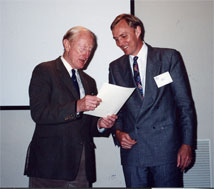
Chris Cowell (President) presenting Honorary Life Membership to Norman Wettenhall – May 29, 1992. (Photo courtesy of Garry Warne)
Norman graduated from the University of Melbourne Medical School in 1940. He was on staff at the Royal Children’s Hospital Melbourne from 1943, when illness caused his early discharge from the Navy, until 1980. He continued to see patients at his rooms for a further decade.
By 1962, he had converted one of his paediatric clinics into a de facto endocrine clinic. The Hospital recognized his expertise and appointed him in 1972 as the Head of the newly created Endocrine Clinic. Thus he was one of the fathers of Australian paediatric endocrinology. A highlight of his career was the time he spent learning with the founder of our specialty, Lawson Wilkins, at the Johns Hopkins University in Baltimore in 1956.
He was only the second doctor in Australia to prescribe pituitary growth hormone and served for a number of years on the Human Pituitary Advisory Committee.
In the year of his retirement from RCH (1980), Norman stimulated the rest of us to establish the Australia and New Zealand Society for Paediatric Endocrinology and Diabetes (ANZSPED) and he was very proud to see it develop into a thriving organization with an international profile. He established a tradition at ANZSPED meetings of devoting one afternoon to a non-medical activity, often a birding expedition. He was heavily involved in Birds Australia. A generous man of prodigious energy, his other interests included art collecting and philanthropy.
Norman made an enormous contribution to medicine, to RCH Melbourne, to our specialty and to ANZSPED. He was made APEG’s first Life Member in 1992. He died in 2000.
Bob Vines
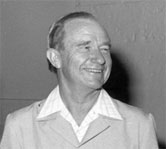
Bob Vines graduated with Honours from the University of Sydney in 1943 and enlisted in the Royal Australian Army Medical Corps (1944 – 1947), serving in Bougainville. After training at Great Ormond Hospital for Children, London, he practiced as a Consultant Physician at Royal Alexandra Hospital for Children, Sydney from 1952 to 1986. In 1965 he worked in Baltimore with Dr Lawson Wilkins. Bob was one of the fathers of Paediatric Endocrinology in Australia, being instrumental in establishing the Australian Human Pituitary Program with the first child being treated with extracted growth hormone in 1963. He was Chairman of the Human Pituitary Advisory Committee for 7 years. He was co-author of a very successful manual for diabetes management. He was the first President of ANZSPED.
Bob was a caring and gifted clinician, with an encyclopedic knowledge of medicine He was very supportive of the psychological needs of the children and their families. He was particularly good with teenagers, especially girls who looked upon him as a father figure and kept writing to him for years after they had left the Children’s Hospital.
His many other pursuits included learning foreign languages, sailing in small skiffs, cross-country skiing (taken up at age 38) and bushwalking, all of which he did with great enthusiasm until forced to stop by illness. A literary man of impeccable integrity, he is best remembered as a quiet achiever who never sought the limelight, but who had an enormous influence on paediatric endocrinology in Australia. He died in 1986.
Jim Penfold
 Jim Penfold established the Department of Endocrinology at Adelaide Children’s Hospital in 1972 after returning from Canada. He was one of the founding members of ANZSPED and was a collaborator in APEG’s early multi-centre trials. From 1985 he served on the Growth Hormone Advisory Committee and as one of its longest serving members, was Chairman from 1996 to 1997. He was Honorary ANZSPED Treasurer from 1991 to 1993.
Jim was the consummate clinician: thoughtful, considered and always putting the child’s interests first. He was widely competent in all areas of paediatrics and this showed in his practice. Those continuing the care of his patients have had the privilege of seeing how much he was admired by them, because Jim’s modest, understated nature would never let others know this. As a colleague and mentor, he was patient and generous of his time and experience.
When Jim retired in 2002, his talents outside medicine guided him into retirement more easily than most. He is a skilled fisherman who used to carry a collapsible rod in his luggage to conferences. It was rumoured that the location of his outreach clinics may have been influenced by local fishing opportunities. He is also an accomplished athlete. He was National Shot Put Champion in 1959, and is a medal holder in shot put and rowing at the Masters Olympics. To the delight of his grandchildren, he carried the Olympic Torch in 2000 before the Sydney Olympics.
Jim was awarded Life Membership of ANZSPED in 2006.
Geoff Byrne
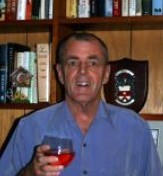 Geoff Byrne was the Director of the Diabetes and Endocrine Unit at Princess Margaret Hospital, Perth from 1987 to 1999. He started outreach clinics in Bunbury, Rockingham, Wagin, Albany, Geraldton, Northam, Kalgoorlie and Esperance. A Foundation Member of ANZSPED, his contributions to our Group have been many and varied.
He served as Councillor, Secretary and then President.
Geoff was a member of the Growth Hormone Advisory Council for many years, the last 2 as Chairman. He was instrumental in changing the GHAC from a closed group, with membership by invitation only, to the present open arrangement where the most senior member resigns each 2 years and a replacement is appointed by ANZSPED Council from members who apply to join.
Always the enthusiastic innovator, Geoff was responsible for the establishment of the State childhood diabetes database in Western Australia and was heavily involved from the outset in APEG’s moves towards a National Database. He was a keen contributor to APEG’s early and successful multicentre clinical trials. Two ANZSPED meetings in Perth were great successes, largely due the organisational skills of our ex-President.
In APEG’s early days, it seemed that almost all members were avid bird-watchers and lovers of the outdoors. Geoff was no exception. He is also an astute collector of antique and first edition books and a skilled furniture maker. He and Ruth are now enjoying a well-earned retirement, following their love of botany and birds and their many other non-medical interests around rural Western Australia together.
Mike Thomsett
 Dr Mike Thomsett was awarded honorary life membership to ANZSPED in November 2009 in recognition of his long, whole-hearted and consistent service to the society.
Mike graduated with Honours at University of Queensland in 1967, winning both the Paediatric and Obstetrics and Gynaecology prizes. While an undergraduate he married his wife Judy, who was to attend many ANZSPED meetings. He represented the University in cricket and baseball. Having been a bonded student, Mike was posted after graduation to one-doctor towns in rural Queensland for five years. In that role he learnt what has stayed with him throughout his career, that people in regional areas need support and advice, and that travelling to the big smoke is not necessarily the best thing for a family.
After completion of the bond Mike trained in Paediatrics at Royal Children’s Hospital, Brisbane. He pursued his dream to be a Paediatric Endocrinologist. He did it tough and without a great deal of support, working first in Adelaide in adult endocrinology in 1977 and then self-funded as a Fellow at the University of California San Francisco under guidance of Professor Grumbach in 1978-79. He published his first major paper there on Craniopharyngioma.
Returning to Brisbane in 1980 he grafted the sub-speciality of Paediatric Endocrinology out of nothing. He started a private practice in both paediatric and adult endocrinology, gradually gaining hospital endocrine sessions, first at Mater Children’s Hospital with Geoff Bourke, then seeing adults at Princess Alexandra Hospital, and finally at Royal Children’s Hospital.
The practice grew and became very busy and after 10 years Mike was finally able to stop seeing adults. His down to earth practical advice encouraged paediatricians in their own practices and this allowed the decentralised approach of Paediatric Endocrinology to be established in Queensland, much to the benefit of families living in rural and remote communities. He also performed outreach clinics in Darwin for many years. Mike retired from hospital practice in 2004 and from his private practice in 2007, just after presenting at the 25th anniversary ASM in Broome a summary of the 9062 referrals he saw – a study since published.
In retirement, Mike and Judy have at last had time to enjoy together their interests of golf, bushwalking, birdwatching, photography, gardening, growing orchids and travel.
Mike’ enthusiastic involvement in our society extended back to its very beginning and his contributions to its success were many. He was present at the famous meeting in Fitzroy Gardens, Melbourne in 1980 when Norman Wettenhall mooted the establishment of ANZSPED. As a Founding Member, Mike presented at the first Scientific Meeting at Leura in 1982 and at many subsequent meetings. He was an avid contributor to APEG’s three early collaborative studies and to OZGROW. In 1995 he performed a major OZGROW review of the effect of hGH in children with dysmorphic syndromes, from which several ANZSPED papers resulted.
At a time when he was busy doing 10 clinics a week, Mike was Treasurer from 1988 to 1991, Secretary from 1991 to 1993 (during which time ANZSPED was incorporated and the Constitution was drawn up) and President from 1993 to 1995. He served as a long-standing member of the GHAC and the OZGROW Subcommittee and was instrumental in setting up the National Diabetes Database to amalgamate the separate databases established by Geoff Byrne in Perth and Neville Howard in Sydney. He organised the Clinical Weekend at Kooralbyn in 1986 and Annual Scientific Meetings at Twin Waters in 1994, Coolum in 1999 and Darwin – Kakadu in 2002 (with Charles Kilburn of Darwin). Together with Garry Warne, Mike wrote a History of ANZSPED in 2005.
Garry Warne
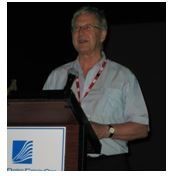 Garry studied Medicine at Melbourne University, and soon arrived at RCH as a JRMO after a brief dabble into adult endocrinology. He trained in paed endo in Winnipeg with Jeremy Winter. Jeremy Winter had a significant influence on Garry, as he recalls that at the end of his fellowship with Jeremy Winter, he said, “Don’t be afraid to blow your own trumpet because no one else will blow it for you”.
Garry returned to RCH as Assistant Endocrinologist in 1977, taking over the service from Norman Wettenhall in 1980, when Norman retired.
Garry began to build the Department at RCH that we recognise today. From the beginning clinical care was of course paramount, but Garry very quickly recognized the critical role of research – relevant research, well before the concept of “Bench to clinic” or clinic to bench. For this is what he did. It was clinical problems, in his case mostly in the intersex area, and decided to manage them in the broadest possible way. Firstly he provided the clinical service, then he established the research infrastructure to investigate the problem, initially focused on Androgen insensitivity – so he set up fibroblast androgen receptor assays.
Garry also saw the need to involve allied health people – social workers and others to help support the affected families.
Importantly he thought even more broadly, establishing parent support groups, which thrived in intersex, growth, Turner, CAH, Prader-Willi syndrome (in which he established the first clinics).
He realized that parents and health professionals needed literature to help them understand the difficult and complex issues affecting their children. His AIS and CAH booklets are used internationally, having been translated into many languages.
The 1980s were highly productive years at RCH, with a number of highly talented fellows joining the team. The word had got around that Garry Warne ran a superb outfit. And here it was again – training young fellows by example that medicine is not just about treating patients in the classical sense. Garry set the example of teaching at all levels, post-graduate, undergraduate, health professional, community and families. This was a part of what was inculcated into the fellows and still is. He taught them that research is an intrinsic part of what we do – for good reason, to answer clinical questions, to come up with new approaches, through the lab and the clinic and the community. And he taught them about wide collaboration, not being afraid to seek advice from others, both locally and internationally, and to advocate for families and children where it is needed – even if it may be painful.
In the mid 80’s Garry organized the first Departmental review – one of the first ever at RCH, with three external reviewers. It was initiated because the department was growing so fast we needed more space. The outcome was highly positive, to the extent that the CEO at the time accused Garry of “rigging” it. He clearly did not know Garry – nothing could be further from the truth – the Department he led really was that good.
In that same period Garry oversaw radical changes in the growth hormone guidelines, when synthetic GH serendipitously became available when Creutzfeld-Jacob disease struck. This was a difficult national issue, and Garry’s leadership and people skills served him and us well.
In the early 1990s Garry looked to Asia for the first time, setting up an Asean Paediatric Endocrine Fellowship with Novo Nordisk – a fellowship, no longer limited to Asia, which still exists today. Garry’s humanitarian passion led him to Cambodia and subsequently Vietnam, establishing in 1998 CHAPHA, renamed RCHI, and then funded largely by Chuck Feeney (Atlantic Philanthropies).
Garry has received many awards, all highly deserved:
- 2005 “For the People’s Health” medal, awarded by the ministry of Health, Socialist Republic of Vietnam
- The Royal Children’s Hospital Gold Medal
- Victorian Public Healthcare Awards – Minister’s Award for Outstanding Individual Achievement
- Australia and New Zealand Society for Paediatric Endocrinology and Diabetes (APEG): the Norman Wettenhall Medal for Excellence in Research and Innovation
- Member in the General Division of the Order of Australia (AM)
- In 2011 the Indian Society for the Paediatric and Adolescent Endocrinology made him an Honorary Life Member.
Garry’s most recent major project has been to attempt to set in place a framework for dealing with Disorders of Sexual Development (Intersex) in Australia in a manner which as far as possible avoids the need for the court to be involved, as has unfortunately begun to happen following a Queensland case. Garry, once again thinking laterally, has put in a place a structured ethical approach involving review by a specially constituted internal ethics committee. He presented these ideas at 5th World Congress of Family Law and Children’s Rights (which endorsed our set of principles by a vote of the congress in the closing session) and in New York at the Joint Meeting of LWPES and ESPE. This has been put in place at RCH, and is a work-in-progress, once again in very good hands following Garry’s departure.
Garry was awarded hi life membership in 2007.
Chris Cowell
 Professor Chris Cowell is recognised as one of Australia’s most distinguished paediatric endocrinologists, whose career has combined clinical excellence, influential research, education, and sustained service to the profession. Over several decades, he has made outstanding contributions to the understanding and management of disorders of growth, puberty, bone health, obesity and diabetes in children and adolescents, both nationally and internationally.
Professor Cowell’s clinical career has been marked by a deep commitment to high-quality, patient-centred care. He is widely respected for his expertise in complex endocrine and metabolic disorders and for his thoughtful, evidence-based approach to clinical decision-making. His work has consistently reflected a capacity to integrate scientific insight with practical clinical application, resulting in improved outcomes for children and young people with chronic and often challenging conditions.
His research leadership and output are extensive and highly regarded. Chris has authored and co-authored a substantial body of peer-reviewed publications spanning growth hormone physiology and therapy, skeletal development and bone densitometry, vitamin D deficiency and rickets, childhood obesity, insulin resistance, and diabetes. His research has been characterised by methodological rigour and strong clinical relevance, contributing directly to changes in practice and the development of clinical guidelines. He has also played a significant role in collaborative, multicentre and longitudinal studies that have advanced understanding of growth and metabolic health across childhood and adolescence. Furthermore, Chris has held leadership positions in research at The Children’s Hospital at Westmead since 2005 and has been the Director of Research at Sydney Children’s Hospital Network since 2011.
Chris has been particularly influential in the field of paediatric bone health. His work in the assessment and interpretation of bone density in children has helped establish standards that underpin current clinical practice. Through this and other research contributions, he has strengthened the evidence base for paediatric endocrinology and reinforced the importance of age-appropriate, developmentally informed approaches to investigation and treatment.
Education and mentorship have been defining features of Chris’ career. He has supervised numerous higher degree students, clinical fellows, and research trainees, many of whom have gone on to hold senior clinical, academic and leadership roles in Australia and overseas. He is widely regarded as an inspiring and generous mentor, known for his intellectual clarity, high standards, and encouragement of independent thinking. His influence is evident not only in the achievements of his trainees, but also in the culture of excellence and collegiality he fostered.
Chris has provided long-standing service and leadership within professional organisations, including APEG, being one of the founding members and serving on Council from 1984 and as president from 1991 – 1993, the first ‘official’ president after the Association was formally incorporated in 1991. Through committee work, guideline development, editorial roles and peer review, he has contributed significantly to the advancement of paediatric endocrinology and the maintenance of high professional standards. His input has been sought and valued in national and international forums, reflecting the esteem in which he is held by colleagues.
Throughout his career, Chris has exemplified professionalism, integrity and quiet leadership. He has been a trusted colleague, a thoughtful contributor to debate, and a strong advocate for multidisciplinary collaboration in child health. His capacity to bring together clinicians, researchers and allied health professionals has enhanced both clinical care and research outcomes.
Chris was awarded the APEG Robert Vines Medal for Clinical Excellence in Paediatric Endocrinology in 2014. In recognition of his exceptional contributions to paediatric endocrinology, his leadership within APEG and related professional bodies, and his enduring impact as a clinician, researcher and mentor, Professor Chris Cowell is richly deserving of this acknowledgement of Life Membership. His legacy will continue through the many clinicians he has trained, the patients whose care he has improved, and the body of work that has shaped contemporary paediatric endocrine practice.
Chris was awarded his life membership in 2017.
Hugo Gold
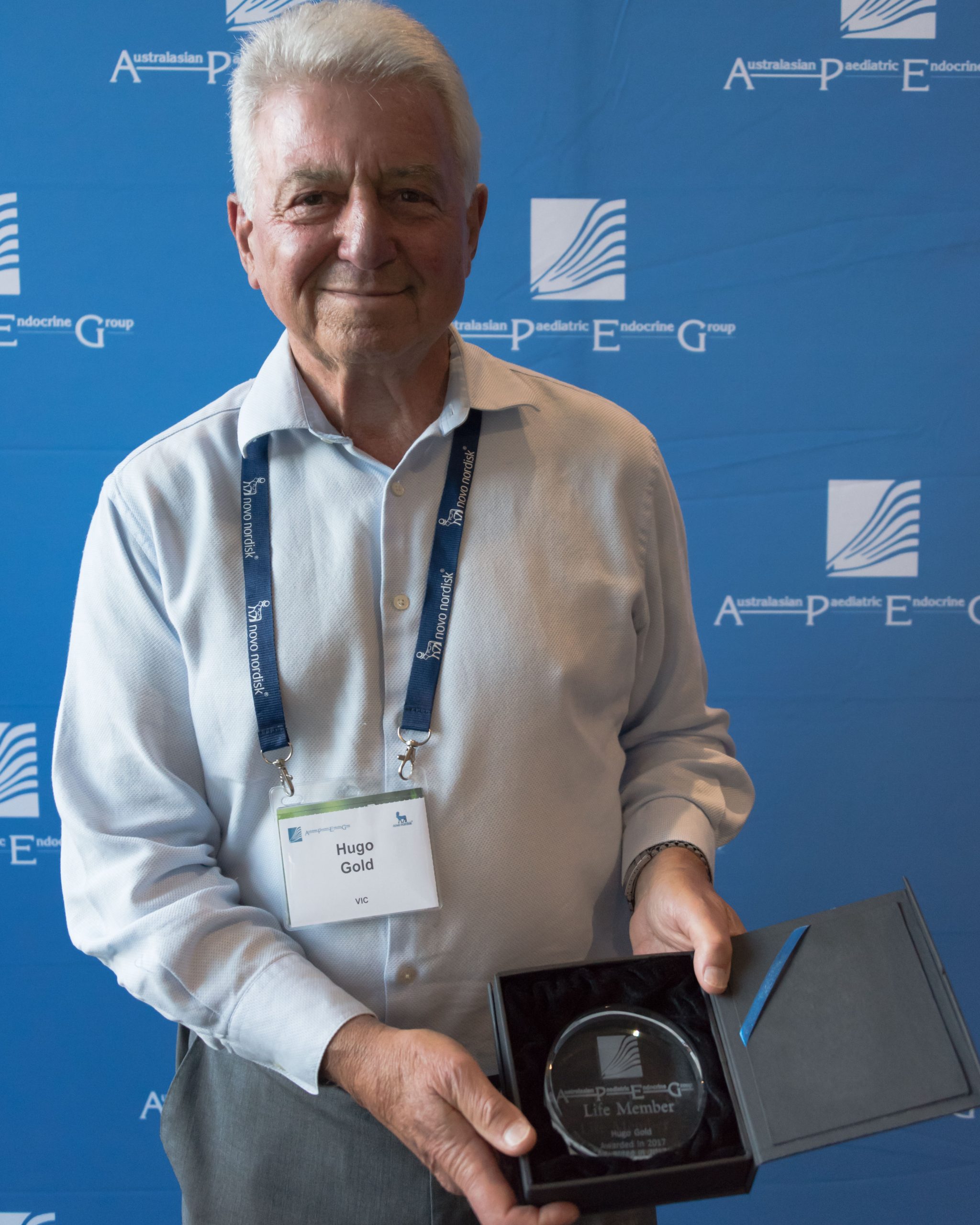 Hugo Gold graduated from Melbourne University in 1960 and undertook most of his undergraduate and residency training at the Royal Melbourne hospital. After his initial training at the Royal Children’s Hospital he was awarded the Cleveland fellowship by the Royal Melbourne hospital to continue post graduate training at Case Western Reserve University Rainbow Babies and Children’s hospital. Whilst in Cleveland in 1965-67 he studied the effects of human growth hormone treatment on the carbohydrate metabolism of children with hypopituitary dwarfism who had never previously been treated with growth hormone. These children were amongst the first to be treated with HGH derived from human cadaver pituitary glands. The pituitary glands were obtained at post mortem examination and the HGH extracted in Dr Maurice Raben’s lab.
On returning to Melbourne in 1969, Hugo began a career in general paediatrics in private practice, and with sessional appointments in several public hospitals, including the RCH. In 1976 he took up a senior consultant position at the Queen Victoria hospital, which was soon to become part of Monash medical centre. Soon after, Hugo picked up his interest in endocrinology and began a specialist paediatric endocrine clinic. With the relocation of queen Vic to Monash medical centre in Clayton, the need for paediatric endocrinology and diabetes services became obvious. However, no funding was provided for this purpose. Nevertheless, Hugo succeeded in setting a multidisciplinary service by innovative financing arrangements using a combination of private practice funds and his single endocrinology session. He supplemented this by obtaining support for a fellowship in paediatric endocrinology from Kabi Pharmacia for 5 years. This was awarded to Dr. Christine Rodda and was the essential ingredient in allowing the service to develop and flourish. Amongst the registrars and fellows who trained there was Dr Patricia Crock.
Throughout this time, Hugo continued a busy general paediatric career, and in 1988 returned to a senior position at the RCH. In his later years there, he founded the Children’s Bioethics Centre, which has established itself as a world leader in the field of clinical ethics consulting.
Hugo is an Associate professor in the Melbourne University department of paediatrics, a Fellow of the Academy of Clinical teachers at Melbourne University, and has honorary life memberships of the AMA, the RACP, and now APEG.
He was awarded the RCH Gold medal and the Elizabeth Turner medal.
Hugo was awarded his life membership in 2017.
Neville Howard
 Neville Howard is a foundation member of ANZSPED, past councillor, life member, and winner of the Robert Vines Medal For Clinical Excellence in 2012. His career spans four decades, two continents, and two Children’s Hospitals in Sydney. He graduated from the University of Adelaide and trained in paediatrics in Adelaide and Toronto. He won a Research Fellowship at the Hospital for Sick Children in Toronto followed by a Staff Specialist appointment there.
Returning to Australia he worked in Sydney at Prince of Wales Children’s (now Sydney Children’s Hospital) and Children’s Hospital at Camperdown (now Westmead). He has made significant contributions in many areas of clinical endocrinology, with over 90 publications.
Neville’s lasting legacy is his advocacy for improved outcomes for children with diabetes. He has served on the board of Diabetes Australia, New South Wales for 26 years (president for 12 years) and on the medical panel of the Juvenile Diabetes Foundation of Australia.
Above all, Neville is a very patient-centred clinician who always puts his patients first. He has an amazing memory for the details of families and huge experience of rare disorders that he willingly shares with colleagues and trainees.
Neville was awarded his life membership in 2017.
Martin Silink
 Professor Martin Silink is one of the most influential figures in the history of paediatric endocrinology and diabetes in Australia. Over more than four decades, he has made outstanding contributions as a clinician, researcher, educator and leader, shaping the care of children and adolescents with endocrine and metabolic disorders and profoundly influencing the development of the specialty both nationally and internationally.
Martin’s clinical career has been defined by an unwavering commitment to excellence in patient care. He has been widely respected for his expertise in paediatric endocrinology and diabetes, and for his capacity to integrate scientific knowledge with compassionate, patient-centred clinical practice. Throughout his career, his work has consistently focused on improving outcomes for children and families living with complex, lifelong conditions, and on advocating for the highest standards of care within health systems.
A defining achievement of Professor Silink’s career has been his foundational role in establishing and developing the Institute of Endocrinology and Diabetes at The Royal Alexandra Hospital for Children, subsequently The Children’s Hospital at Westmead, Sydney. Over 42 years of distinguished service, he built not only a department of national and international standing, but also a professional culture characterised by collaboration, intellectual curiosity, advocacy, and mutual support. His vision extended well beyond physical infrastructure; he fostered an ethos that valued clinical excellence, research innovation, education, collegiality and the shared purpose of improving the lives of patients and families. This enduring spirit continues to define the Institute and its work.
Martin has made substantial contributions to research and scholarship in paediatric endocrinology and diabetes. His academic work has helped advance understanding in a rapidly evolving field and has informed clinical practice and policy over many years. Through research leadership, collaboration and mentorship, he has supported the translation of scientific discovery into meaningful clinical benefit. His contributions have been recognised nationally and internationally, reflecting the breadth and depth of his impact.
Education and mentorship have been central to Martin’s legacy. He has shaped the careers of countless clinicians, researchers and allied health professionals, many of whom have gone on to leadership roles within paediatric endocrinology, diabetes and child health more broadly. Widely regarded as a generous and trusted mentor, Martin has been known for his wisdom, encouragement and willingness to invest time in others. His influence is evident not only in academic achievements, but also in the values, professionalism and sense of purpose instilled in those he trained.
Martin has provided sustained leadership and service to professional organisations, including APEG. Through these roles, he has contributed to the advancement of standards of care, the development of guidelines, and the strengthening of professional networks across Australia, New Zealand and beyond. His leadership has helped shape the identity and direction of paediatric endocrinology as a specialty during a period of significant growth and change. His leadership on the international stage has been highlighted through his roles as President, International Society of Paediatric and Adolescent Diabetes 1999 – 2002 and President, International Diabetes Federation 2006-2009
Beyond formal achievements, Martin has been widely admired for his personal qualities. Colleagues consistently speak of his integrity, generosity, vision and capacity to inspire. He has been a unifying presence within departments and professional communities, bringing people together around shared goals and encouraging innovation while maintaining a clear focus on patient welfare. His leadership style has been characterised by trust, respect and a deep belief in the potential of individuals and teams to achieve more together.
Martin’s career has coincided with, and contributed to, a period of extraordinary advancement in paediatric endocrinology and diabetes. His influence has extended across clinical practice, research, education and advocacy, leaving a legacy that continues to shape the specialty. He was one of the founders of APEG in 1982, and served as president from 1986 – 1988. In addition, the department and Institute he founded stand as a lasting testament to his vision and leadership, as do the many clinicians and researchers whose careers he has shaped.
In recognition of his exceptional service to paediatric endocrinology and diabetes Martin was awarded the APEG Robert Vines Medal for Clinical Excellence
in Paediatric Endocrinology in 2008. The Life membership is presented to him to further acknowledge his foundational leadership, and his enduring contribution to the Australasian and international paediatric endocrine community. His legacy will continue through the institutions he built, the professionals he mentored, and the countless children and families whose lives have been improved through his work.
Martin was awarded his life membership in 2017.
George Werther
 George Werther graduated in Medicine from the University of Melbourne in 1971, and soon entered paediatric training at the Royal Children’s Hospital in Melbourne. He then spent time training in paediatric endocrinology and diabetes in Oxford, UK and Cincinnati and Stanford in the USA.
He returned to Australia in 1983 to join Garry Warne, Norman Wettenhall and John Court in setting up the Department of Endocrinology and Diabetes at the Royal Children’s Hospital. He developed a laboratory-based research program based on diabetes and growth, which over 30 years provided insights into growth disturbance in diabetes, and the role of growth factors in the developing and injured brain and skin. His work in skin using “antisense” provided the basis for a biotech company, via a potential new therapy for the skin disease psoriasis, and more recently his work suggested new potential cancer therapies via manipulation of growth factors.
George led early trials of growth hormone in short children with a variety of disorders, and also served as Chair of the Australian Growth Hormone Advisory Committee, where Australia led the way internationally for growth hormone therapy in short children who were not growth-hormone deficient. He was also involved in clinical and laboratory studies examining novel methods of growth regulation in children, including a landmark study following up tall girls treated with oestrogen in the 1960s-80s. This study, published in the Lancet, showed that such therapy had adverse effects on fertility, and led to an international change of practice, whereby such therapies were no longer used.
During the 1990s George led the establishment of the Centre for Hormone Research at RCH and the Murdoch Children’s Research Institute, in recognition of the strong endocrine research consortium comprising the groups of Garry Warne, Andrew Sinclair and George, covering a broad spectrum of laboratory and clinical research in paediatric endocrinology. A common purpose of the groups in the Centre, which remains today, was a focus on “translational” research, namely that research directions were informed by clinical issues, and where possible, research outcomes are applied to those clinical needs.
In 1999, George took over the directorship of the Department at RCH from Garry Warne, and he remained head for some 16 years. During his tenure George maintained the principle that research played a critical role in support of both clinical practice and training in paediatric endocrinology. In 2015 he stood down as director, and Matt Sabin took over.
George has served on various national and international scientific committees, including the ANZSPED Presidency, and more recently on the Endocrine Specialist Advisory Committee of the Royal Australasian College of Physicians, overseeing training qualifications in Paediatric Endocrinology. George has always had a keen interest in training of young paediatric endocrinologists, and has trained many fellows, who have become established paediatric endocrinologists in Australia and overseas. This includes some six professors.
He was humbled by his being awarded the Wettenhall Medal by ANZSPED in 2009 for his achievements in research and innovation, and more recently the International Award of the European Society for Paediatric Endocrinology, for scientific achievement in paediatric endocrinology.
George’s other passion outside medicine is theatre both acting and directing, with a particular interest in theatrical representations of science and scientists. Following his retirement in 2019 he looks forward to spending more time with his wife Mary, children and grand-children, as well as in theatre and travel – especially visiting his son and family in California.
George was awarded his life membership in 2017.
Patricia Crock
 Below is the presentation that was made at the Conference dinner to award the Life Membership. This was presented by Louise Conwell, President:
On reviewing a nomination APEG Council can elect honorary life membership to a person distinguished by their contribution to APEG and to the knowledge of paediatric endocrine disorders and the welfare of children with endocrine disorders and their families.
I am honoured and privileged to present APEG’s 11th Life Member Award and the first to a female. I welcome to the stage Professor Patricia (Trish) Crock.
Trish is both a qualified Paediatric Endocrinologist and Adult Endocrinologist who also undertook International training in Sweden and Canada.
In 1993, she was appointed the inaugural Head of Paediatric Endocrinology at the institution that she then built a highly successful Paediatric Endocrinology Unit in subsequent decades: the John Hunter Children’s Hospital, Newcastle.
Trish has been a wonderful ambassador for APEG, with excellent networking ability at international meetings due to her interest in our colleagues and their work.
Trish has left an indelible imprint on APEG. As President between 2003-2005, she modernised APEG and built the platform which has enabled APEF to become so successful since then. She recognised the value that employing a Secretariat would add and employed Will Organise to run the 2004 APEG Annual Scientific Meeting in Auckland, here in New Zealand. Lyndell Wills remains our invaluable Secretariat to this day, with continued growth of APEG and its activities.
It is very special to be able to award this, as Trish awarded me my Emerging investigator award at that New Zealand meeting while she was President in 2004.
The medals that we now offer annually were an idea during her Presidency, first awarded in 2006. Professor Crock herself was awarded the Robert Vines Medal for Clinical Excellence in Paediatric Endocrinology in 2018.
She has had a particular passion for the underlying genetic basis of paediatric endocrine conditions.
When awarded that medal, Trish was described as warm, funny, determined, genuine and generous.
Her recent contribution has been as Chair of the Program Organising Committee. She is working on a video compilation of photographs and member interviews to capture the decades of APEG growth and change.
Trish has also had longstanding involvement with ESA, so will be pleased to receive this honour in this forum of a joint meeting.
It is with pleasure that APEG awards Life Membership to Trish Crock.
Trish was awarded life membership in 2022.
Jenny Batch
Below is the copy of the presentation made on the night the award was presented. This was presented by Louise Conwell, President.
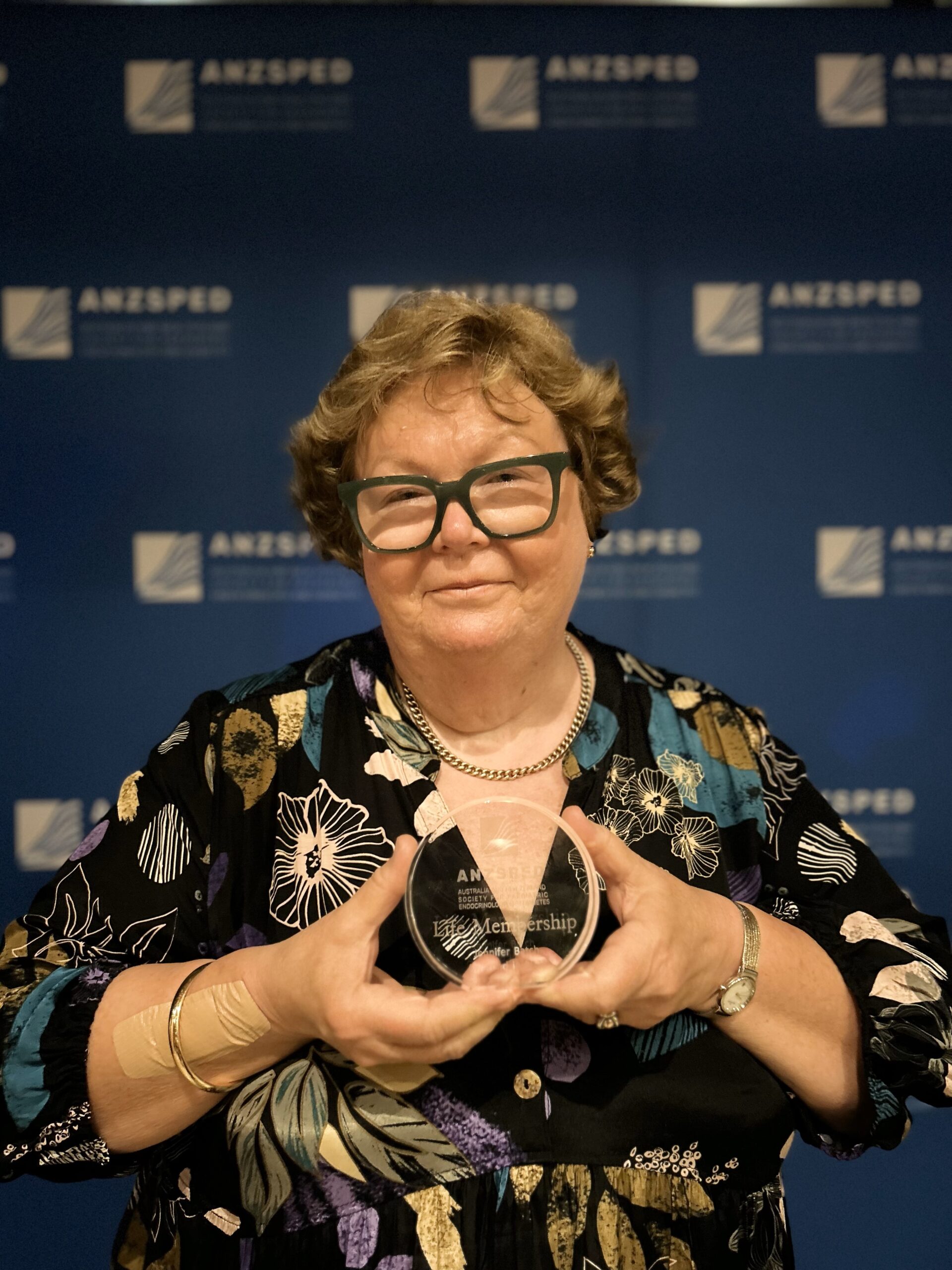 Jenny has been an integral member of our organisation.
Jenny graduated from the University of Queensland, then completed paediatric endocrinology training at the Royal Children’s Hospital, Melbourne, after a year of adult endocrinology experience in Brisbane.
After completing her MD in Melbourne related to aspects of growth hormone in adolescents with type 1 diabetes, Jenny ventured to Cambridge in the UK to gain basic science research experience and delved into the world of the androgen receptor, with some choral singing on the side.
In 1992 Jenny returned to RCH Melbourne as a Paediatric Endocrinologist until 1997 when Queensland lured her back to roles including Director of Paediatric Endocrinology and Adolescent Medicine, Director of Research and University of Queensland Professor of Paediatrics. She has worked in the private sector and continues in clinical practice at the Queensland Children’s Hospital.
Jenny’s academic achievements and contributions have been extensive: publications, grant attainment, an editorial board, working groups to name a few. Such contributions have covered a wide breadth of paediatric and adolescent endocrinology and diabetes.
Jenny too has been one of the cornerstones of APEG, now ANZSPED. She held the position of Secretary from 1995-1997 and then President from 1997-1999, in fact the first female Secretary and the first female President. She has contributed to Subcommittees including DSD and the GH Advisory Committee, with leadership of the Training and Education Subcommittee.
An essential acknowledgement is Jenny’s constant commitment to the supervision and mentoring of clinical paediatric and paediatric endocrinology trainees (both national and international), higher degree research students, allied health colleagues and medical students. Glancing through publications and supervision lists, so many of us are named.
Jenny has developed lovely bonds with her long-standing patients. They have been known to visit after moving to adult care and ask if they can come back!
Jenny has travelled extensively from one end of the globe to the other, figuratively and literally. The penguins of Antarctica have welcomed her back more than once! Her book club hosting features books, as one might expect, but also the cuisine and décor of the relevant culture of the story.
To conclude: a fact, some wisdom and a quote.
Fact: Professor Batch is very generous to our Department. She has erected a brick wall ‘poster’ above her desk so if anyone ever feels the need, day or night, we have a convenient place to bang our heads!!
Wisdom: Jenny encourages ‘cortical scars’, not from head banging but those that arise from those key clinical learnings we never wish to forget.
A Jenny quote from a recent clinical meeting: “We always take a bow when the glucose level is in range”
So, Jenny, time to take a bow. Thankyou for your contributions and it is with pleasure that ANZSPED awards you Life Membership.
Jenny was awarded life membership in 2023.
Christine Rodda
Below is the copy of the presentation made on the night the award was presented. This was presented by Peter Simm, Vice President.
 It is a great honour to be presenting Christine Rodda life membership of ANZSPED. Christine has been an integral member of our organization throughout her distinguished career and it is entirely fitting that this enormous contribution over 4 decades is recognized and celebrated.
Christine graduated from the university of Melbourne and then completed her paediatric training at the Royal Children’s Hospital Melbourne. She headed to Oxford to undertake subspeciality training, and also spent time at Great Ormond Street. Her interest in bone and mineral medicine was evident when she chose Prof Jack Martin to supervise her PhD in PTHrP, a very important body of work which is still quoted to this day. She furthered this interest with post-doctoral studies at Mass General in Boston.
In 1991, Christine commenced at Monash health as a Paediatric Endocrinologist. She was a driving force behind the evolution of this service, especially her role in helping set up the Young Adults diabetes service – with her typical insight, she saw that there was a strong need to improve the transition of young people with diabetes, and this service continues today to provide one of the best clinics of its type, with its template reproduced in many other centres. Christine ascended to the role of head of department in 1999 and continued to grow and develop this crucial service in the booming population zone of south east Melbourne.
In 2012, Christine moved from Monash to Western Health looking for fresh challenges. Once again she was at the forefront of setting up a service in an area that was hitherto underserviced. She established a Paediatric Endocrine clinic and young adult diabetes service at Sunshine, as well as providing much needed Paeds Endo services to Ballarat.
Academically, Christine has continued to undertake important work especially in her primary field of calcium and vitamin D metabolism, but also publishing in other areas such as diabetes. She has published over 50 peer reviewed articles despite her very busy clinical and administrative workload, and received many grants and awards over her career. Her move to Western Health saw her lead the paediatric academic program there for University of Melbourne, setting up a Paediatric teaching program for Sunshine.
Christine has been one of the cornerstones of APEG/ANZSPED. She has held formal positions of Treasurer from 1995-1999 and was APEG president from 1999-2001. She has been active on many subcommittees and is still contributing as an important member of the bone and mineral working group and the hypophosphatemic rickets writing group.
Christine’s contribution however goes far beyond the facts and statistics. Her capacity to ask searching and insightful questions of presenters at conferences is legendary, and she is not daunted by bigger fora – she contributes at big international meetings and smaller local ones alike. Her strong desire to teach and mentor means that many of us in this room are heavily indebted to Christine for her support and guidance. There are many generations of medical students who have been inspired and educated by her – even my brother, a plastic surgeon now, remembers her paediatric tutes at Monash and their value!
Christine is incredibly loyal and committed to those she is mentoring. She is extremely generous with her time and input, and is always positive and encouraging. She has many passions and interests outside of work, including being an outstanding choral singer, while she and Elsdon enjoy escaping the city for their haven in Lal lal. Recent years have not been without significant challenges for Christine, yet she continues to always provide a cheery presence at meetings and her support and encouragement is unwavering.
Christine, you have been an inspiration to so many of us, we are extremely grateful to you for all you have done for APEG/ANZSPED and its members. We wish you and Elsdon all the best for retirement and we hope you will accept this nomination for life membership of ANZSPED.
Christine was awarded Life Membership in 2023.
Margaret Zacharin
Below is the copy of the presentation made on the night the award was presented. This was presented by Peter Simm, President.
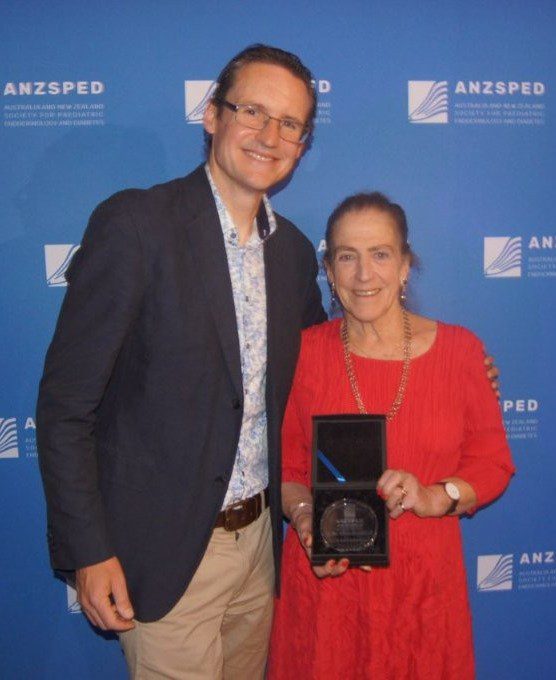 To provide a brief summary of Margaret’s career and contributions is an impossible task. Margaret’s legendary status amongst the Paediatric community in Victoria, and the global Paeds Endo community, means that any attempted portrait will be merely a slice of her myriad of achievements. Everybody in this room will undoubtedly have a Margaret story, but as someone who has known her for 30 years, and worked with her for nearly 25, I will do my best to convey as comprehensive a portrait as possible.
Margaret, like many of the pioneers of Paediatric Endocrinology, was an adult specialist, having trained at St Vincents in Melbourne and the Garvan in Sydney. She started coming across to RCH to undertake clinics in 1982, and by 1985 was even being paid for this privilege, in another sign of the times. She rapidly became indispensable, as she built up an enormous practice of the most complex, rare and challenging patients. Over time, she focused increasingly on paediatrics to the point where she left adult public Endocrinology behind, although to this day still has a thriving adult and paediatric private practice. This lifespan clinical approach gives Margaret unique insights, and has also smoothed the transition pathway for countless patients, who simply move care from RCH to her rooms!
While Margaret’s clinical acumen was and is legendary, a former head of department allegedly remarked to her many years ago that she was not in the higher echelon of the field, as she had not published widely. Never one to shirk a challenge, from that moment on Margaret has been the research engine of the RCH department, perennially topping the annual list of most publications, with over 200 peer reviewed manuscripts to date and countless book chapters and invited talks. She successfully completed one of the rare RCTs in clinical bone, which had defeated other renowned researchers globally. Her drive and energy has assisted many budding endocrinologists to get those crucial early publications, with many of our CVs showing “senior author – Margaret Zacharin” on our first few papers. There’s nothing like daily emails from Margaret demanding the next draft to make sure that you complete a manuscript!
While Margaret’s exterior can be intimidating at first, given her towering intellect and extraordinary breadth of knowledge (aside: as a medical student, her study group’s favourite game was to trick each other with the rarest syndrome they could find), she is an extremely generous person who goes far above and beyond to support people. Margaret often hosts our overseas visiting Fellows and guests, and aside from the initial shock of her sculpture garden (made by her of course), they enjoy the wonderful Zacharin-Clifford hospitality, even if that means long hikes or other intrepid excursions. Margaret also regularly hosts massive dinner events – using nothing more than a 4 burner stove, a conventional oven (and about 20 family and friends roped in as helpers) she produces sumptuous feasts, including a Christmas party for a wide range of her friends, family and colleagues, topped off with a trifle that really deserves its own speech!
What adds to this legendary status is the breadth of her extracurricular activities. Jewellery making (including ANZSPED medals!), dancing, sculpture, music appreciation, cooking for the masses as mentioned and increasingly grandchildren are just a few of the other activities that she throws herself in to. Her incredible energy is best summed up by an article in the FRACP magazine many years ago, which was a profile of Margaret and her combined medical and other activities, which to emphasize her busyness, breathlessly stated in the opening paragraph “Margaret Zacharin sleeps 6 hours/night!”. On asking her about this the next day, she told me it was rubbish – “never more than 5”!!
Margaret’s contributions to ANZSPED are immeasurable. While she has eschewed traditional leadership roles, she has contributed enormously in many different ways. She has been a regular speaker at both the ASM and Fellows school – indeed when there was a last minute gap in the Fellows school program this year, it was no surprise that Margaret readily agreed to help out. There is no topic in Endocrinology that she can’t speak on with authority, and even in a meeting if she seems to be “resting her eyes”, she will undoubtedly have a perceptive question coming. Margaret has been involved in different working groups over the years, and we in the paeds bone community have been grateful for her pioneering efforts in our field and ongoing crucial input. The hormones and me booklet series is a strong legacy that Margaret has given our society – while many of you have made fantastic contributions, Margaret continues to provide a crucial role in updating and overseeing the newer editions, having written much of the initial content herself.
Margaret’s tutorial programs in the evenings open to all around the world typify her commitment to training the next generation. There are hundreds of our colleagues around the globe who have benefited from her teaching and guidance, from visiting Fellows, to attendees at ESPE training schools, to members of overseas faculties where Margaret has given talks. While for most of us, an overseas trip means a chance to see new places, meet up with family/ friends/colleagues, maybe attend a meeting, for Margaret it usually means giving at least a dozen talks at various conferences and departments that she visits! Margaret’s contribution to global Paeds Endo was recognized by receiving the ESPE outstanding clinician award in 2017. She has also won the APEG/ANZSPED Robert Vines award, the RCH Turner medal for outstanding clinician, and was made an OAM in 2018, which was upgraded to an AM in 2023.
So while this is really just scratching the surface of her incredible achievements, hopefully it in some way captures the unparalleled breadth of her contributions in our field and beyond. Our lives are all the richer because of her input, and so many of us owe her enormously for her mentorship and support. While unlike the AFL (that’s a sporting code Margaret) we don’t have formal legend status in ANZSPED, there is no question that is what Margaret has attained, and in place of that we instead offer her life membership of our society. On behalf of us all, thank you Margaret!
Margaret was awarded Life Membership in 2024.
Phil Bergman
Below is the copy of the presentation made on the night the award was presented. This was presented by Peter Simm, President and Louise Conwell, Council member.
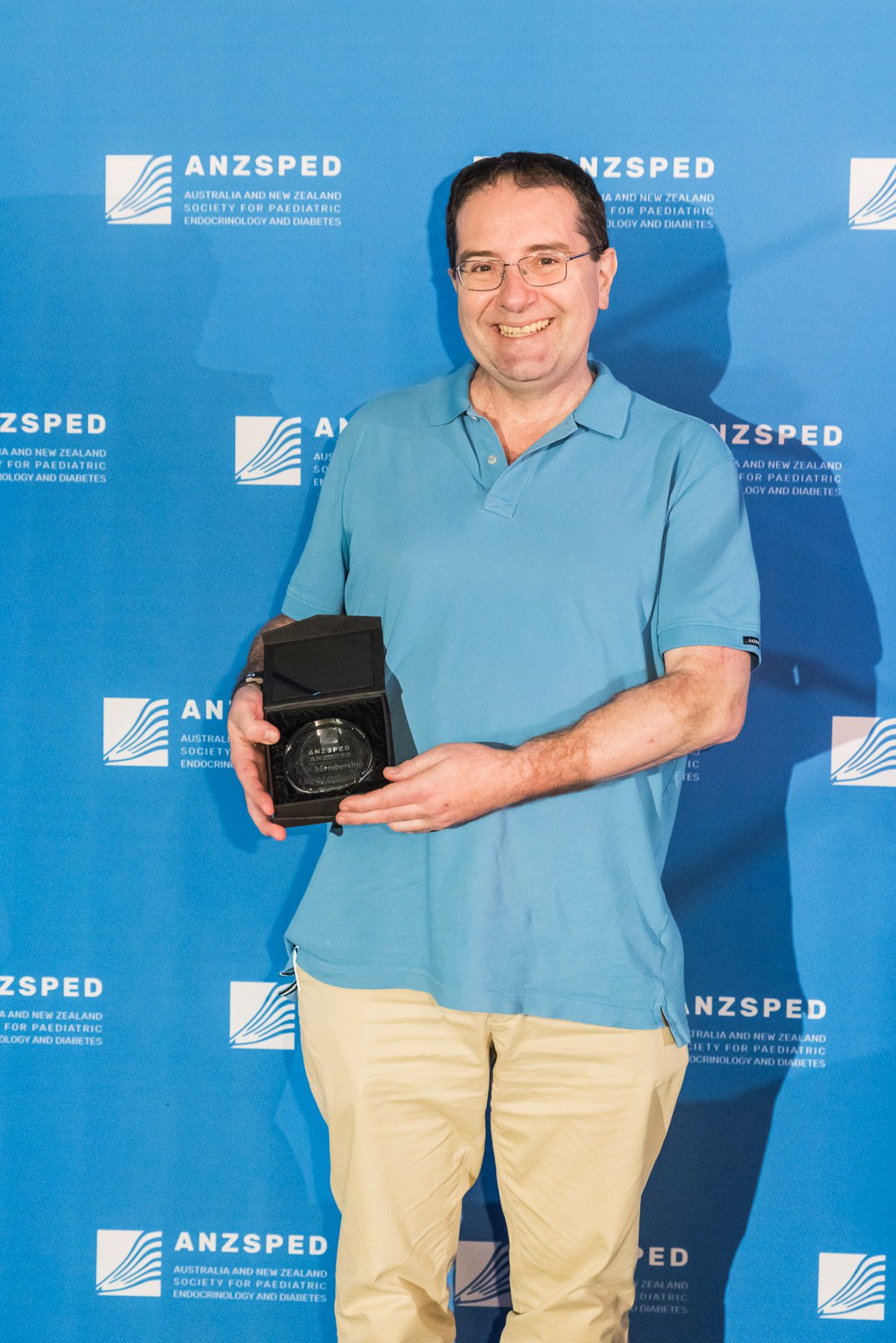 The legacy of the ANZSPED Fellows School is inseparable from Phil’s vision, leadership, and sustained advocacy. From its inception, Phil understood that education is not just about imparting knowledge, but about building community, fostering collegiality, and nurturing the next generation of paediatric endocrinologists.
The first APEG Fellows School in 2003, memorably held at Melbourne Zoo, set the tone for what would become a treasured tradition. Led by Phil alongside Kim Donaghue and Andrew Cotterill, the program brought together a cohort of trainees who are now leaders within ANZSPED and the wider field. While the zoo setting was playful, it was also purposeful. Phil believed that shared experiences, curiosity, and connection were essential to sustaining our specialty. The integration of a social activity into the program became a defining feature of the School, reinforcing relationships and professional networks.
Over 23 years, the Fellows School has evolved alongside the Society. It has travelled across Australia and New Zealand, adapted through the pandemic with virtual delivery, and expanded to include Observers from general paediatrics, nursing, allied health, and laboratory science. This interprofessional inclusivity reflects both the reality of modern practice and the values Phil championed. Throughout, the School has remained a place where clinical reasoning, clarity, and critical thinking are nurtured and shared.
Many have witnessed the impact of the Fellows School firsthand, whether as attendees, convenors, or faculty. Its influence on confidence, capability, and collegiality in trainees is enduring, and Phil’s values remain woven through every iteration. He did not simply create a teaching event, but a rite of passage grounded in rigour, equity, humour, and shared purpose.
Phil’s passion for training extended well beyond the Fellows School. As the APEG representative on the RACP Endocrinology Advanced Training Committee, he was a tireless advocate for paediatric trainees. He ensured paediatric training was recognised as equal in standing, not an add-on to adult endocrinology. His advocacy led to clearer, more transparent trainee rotation sign-offs and the establishment of paediatric site accreditation, milestones that have significantly strengthened training quality. He also championed regular teaching sessions throughout the year, resulting in the successful “How I Do It” series, which continues to be highly valued by trainees.
Another lasting contribution was Phil’s pivotal role in developing the Association’s website. In 2007, he worked to establish an independent APEG website, transforming it into a comprehensive educational resource. Phil devoted countless hours curating links and materials across nearly 20 topic areas, creating a foundation that remains central to the site today. Although refreshed and rebranded as ANZSPED in 2022, the core content Phil developed endures. The website now attracts over 21,000 active users annually, with global reach, a testament to the foresight and effort invested at its inception.
Clinically, Phil’s career reflects the same depth of commitment. Trained at RCH and Monash, with experience spanning paediatric endocrinology and adolescent medicine, he brought unique skills to patient care. As a consultant from 2001, he was renowned for his dedication, compassion, and patient-centred approach, maintaining exceptional engagement despite a vast clinical workload. As Head of Department at Monash, he advocated strongly for service improvements and supported his team with unwavering loyalty. Alongside clinical excellence, Phil was a passionate educator, an active contributor to research, and a participant in numerous committees at both institutional and ANZSPED levels.
Phil’s contributions to ANZSPED are perhaps best summarised as those of an “ideas man” who also made ideas happen. From Fellows School to the website, training reform, thyroid and growth committees, and Council service, his influence has shaped the Society in lasting ways. Those who have worked with him have learned not only about endocrinology and diabetes, but about advocacy, generosity, and how to make a meaningful difference.
It is a privilege to recognise Phil as a Life Member of ANZSPED. Though his health has limited his involvement, his legacy remains profound, and his ongoing contributions are deeply valued. This honour is richly deserved, and the gratitude of the Society is enduring.
Phil was awarded Life Membership in 2025.
Bin Moore
Below is the copy of the presentation made on the night the award was presented. This was presented by Shubha Srinivasan and Kristine Heels, Council members.
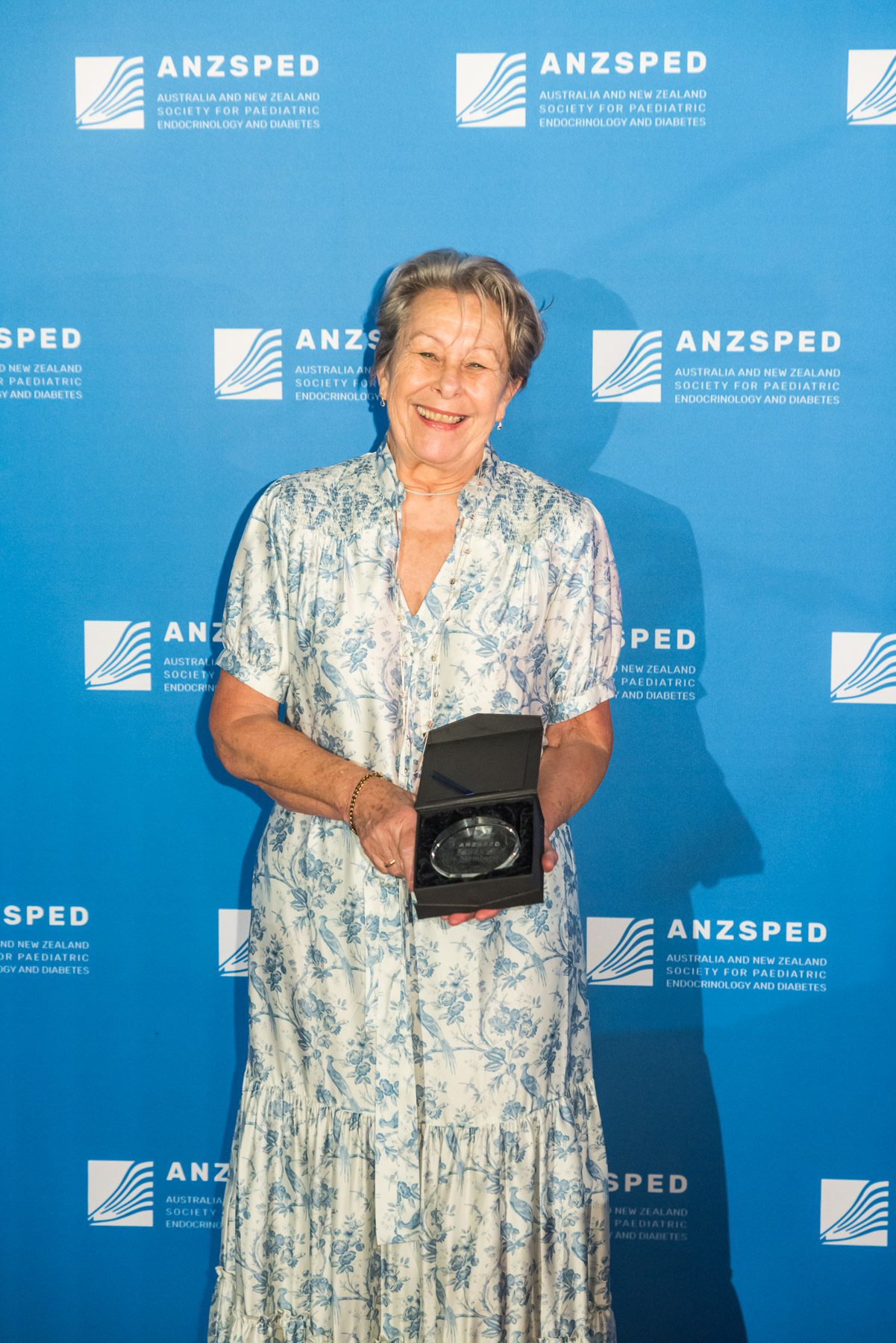 ANZSPED is delighted to award Life Membership to Endocrine nurse extraordinaire Bin Moore.
We can all be very thankful that about 50 years ago a young woman got on the wrong Sydney bus and instead of going to teacher college, ended up at the Children’s Hospital. Little did anyone know at the time that she would go on to provide an extremely high level of multidisciplinary patient care, pioneer paediatric endocrine nursing in Australia and become a leader, teacher, mentor and friend to many. As you all know we start our conference with the Robert Vines lecture in honour a founding member of APEG. It seems fitting that Bin who was one of Bob’s earliest colleagues is receiving her life membership award tonight.
Bin started her nursing training at The Royal Alexandra Hospital for Children in Camperdown Sydney in 1974. Her first exposure to Endocrine nursing was via the Sailing League Ward in about 1980 where she was instrumental in developing endocrine testing protocols with Professor Martin Silink.Martin obviously recognised Bin’s potential and subsequently asked her to travel to the UK and Toronto in 1981, to visit other Endocrine services and benchmark paediatric endocrinology as it existed at the time.Right from the beginning, BIn was not afraid of hard work –she would do all the dynamic testing while caring for complex sick children in the 6 bed ward and checking glucose levels on a yellow spring analyzer (whatever that is) and then relax and have a laugh on the ward verandah with her colleagues.
As many would recall, in May 1985, the pituitary Growth Hormone program for children with GH deficiency was ceased because of Creutzfeldt-Jakob disease found in several cases worldwide, including one patient treated at RAHC. Bin led the contact program for current & past GH recipients. In the mid 1980s the synthetic Growth Hormone era commenced & Bin worked tirelessly with Professor Chris Cowell, the Department of Health and the APEG growth committee to develop the growth hormone programme. This saw the increased use of GH in non-GH deficient causes of short stature. Collaboration across Australian Paediatric Endocrine Centres led to the initiation of two randomized trials of synthetic GH, one in Turner Syndrome and the other in non-GH deficient short, slowly growing children. RAHC was the lead recruiter for these trials with Bin and her nursing colleagues played key roles.
From there Bin continued to show an interest in audit and research, despite the enormity of the clinical trial paperwork. She always remained curious about clinical management and was the one to ensure the patient and family’s perspective was heard and that junior and senior medical staff did not overwhelm families with technical jargon. Bin’s wisdom and guidance has been a lifeline to innumerable trainees and junior consultants at CHW and beyond, for that we thank you.
Across the late 1980’s & early 1990’s the formation of the Paediatric Endocrine Nurses Group was established, Bin’s input and leadership was critical to the success of this initiative. Bin subsequently developed strong links with ‘like’ minded groups across North America and the UK and met with them many times over the years, helping to further develop the professional standing of Paediatric Endocrine Nurses. Bin was a founding member of ENSA and worked tirelessly to ensure paediatric endocrine nursing was considered an equal and not an add on to the world of adult endocrinology.
Bin is a kind, caring and curious nurse who is interested in her patients holistically, she is knowledgeable, a great networker, passionate about patient and family education and always at the forefront of patient centred care. Bin enjoys nurturing the junior Endocrine nurses of the future and is driven to connect with them and instil the same passion she has for the specialty. Bin also spent time in a coordinator role supporting adolescents as they transition from paediatrics to the adult system. Bin believes strongly that guidance and support is required to ensure that our paediatric patients are capable of navigating the system and able to advocate for themselves as they mature.
Bin always goes above and beyond for her patients, her families and her colleagues and has been a regular presenter at local, national and international meetings. Bin has always been passionate about the education of families and health professionals. She shares her knowledge enthusiastically and is a strong advocate for children with endocrine disorders and her profession. She has developed resource manuals for endocrine nurses, run educational days for patients, families and her peers and lead the development of ANZSPED patient resources on various endocrine conditions.
Bin’s involvement in APEG/ANZSPED is long standing,commencing at the inaugural meeting in 1982. The legacy of Paediatric Endocrine nurses’ involvement in ANZSPED can be directly attributed to Bin as she was the first allied health representative on council from 2011-2019. She would never hesitate to step up and accept membership to many relevant committees for e.g.: The International Coalition of Organisations Supporting Endocrine Patients, the MAGIC foundation and she was an active member on the ANZSPED website committee for several years. Bin was also the first allied health attendee to attend the fellows school & instigated the APEG nursing development grant. In 2022 Bin was the worthy recipient of the inaugural ANZPSED Medal for Excellence in Nursing, Allied Health or Laboratory Science.
At a local level the Dept of Endocrinology and Diabetes at The Children’s Hospital at Westmead has greatly missed Bin’s positive energy since she has taken her well-earned long service leave. She would make sure that we started the day with a cheery greeting and would remind us to go home on time. Bin would make coming to work fun – we all miss her rowing and bike riding stories, her love of interesting shoes, glamourous earrings, delicious recipes, full hearted fancy dressparticipation in hospital party day and we all miss hearing about her upcoming trips to visit her beloved grandchildren. Our department is just not the same without her. So, in conclusion, these are just a few of Bin’s incredible achievements that I hope go a little way to capture her contribution to APEG/ ANZSPED and Endocrine nursing. Endocrine nursing is in a more robust state because of her input & the nursing profession owes her enormously for her mentorship & support & I know the audience will join with me when I say, it has been my honour to work with her, as we offer her a life membership to ANZSPED.
Bin was awarded Life Membership in 2025.